

For MAF Carrefour
AI-driven CX transformation for retail
From fragmented experiences to intelligent, unified customer journeys.

Amin Ahmed Khan
CX & AI Solutions Architect
Introduction
Who I am.
- A decade building scalable systems across cloud, data, and AI for global customer-facing brands.
- Focused on AI-driven customer experience and agentic systems running in production — not prototypes.
- Strong at translating complex technology into measurable business outcomes — and the conversations that get them funded.
- Outside of work: long-distance runner, chess player, and home barista — all things that reward patience and process.
Solution architect
Amin Ahmed Khan
My edge
What sets me apart.
01
The bridgeThe bridge between business, AI, and architecture
I can hold a P&L conversation with a CDO and a latency conversation with an MLOps lead in the same hour — and translate between the two without losing nuance.
02
Production-gradeProduction-grade AI — not demos that die after the POC
Guardrails, evals, observability, fallback paths and a clear cost model on day one. I've seen too many GenAI pilots fail in week three to skip these any more.
03
Systems thinkingSystems thinking, not isolated features
I design for the whole journey — data, channels, agents, ops — because a brilliant chatbot bolted onto a broken backend is still a broken backend.
My approach
How I approach problems.
Start with the customer journey, not the tech
Map the moments that matter — where customers feel friction and where the business loses revenue. The journey is the brief.
Find the structural friction, not the symptom
Most "AI problems" turn out to be data problems, integration problems, or operating-model problems wearing an AI disguise.
Smallest scalable solution that earns the right to scale
Ship measurable value in ~90 days with a clear path to platform — guardrails, evals, and a cost model from day one.
The fit
Why this role, why Sprinklr.
Two bets that, for me, line up almost perfectly.
The role
The exact intersection I want to operate at.
- CX and AI converging — not as a buzzword, but as the next decade of enterprise software.
- Real enterprise scale — the kind where a single architectural decision affects millions of customer conversations.
- A customer-facing seat — where the architecture I design has to survive contact with a real CDO and a real budget.
Sprinklr
One of the few companies positioned to win the next wave.
- Unified-CXM platform — one stack across Service, Insights, Social, and Marketing, while most of the market is still a federation of point tools.
- AI as an orchestration layer across every channel and every team — the architecturally correct bet.
- A clear point of view on the future of customer engagement — and the products to back it up.

From vision to execution.
Let's look at how I'd solve real CX challenges for one of the largest Middle East retailer.
Physical store
370+ stores across 16 markets — the moment of truth for the brand.
Mobile & web
Carrefour app, e-commerce, and the SHARE loyalty program.
WhatsApp & voice
Conversational service, order updates, returns, and care.
Fulfillment
Same-day, click-and-collect, last-mile — every promise tested.

Carrefour, operated by Majid Al Futtaim.
Geography
Middle East, Africa & Asia
Multi-country operations spanning distinct languages, regulations, and last-mile environments.
Channels
Hypermarkets, supermarkets, web, mobile.
Omnichannel presence across physical retail, e-commerce, and a last-mile delivery ecosystem.
Loyalty
SHARE — group-wide rewards.
A unified loyalty program that spans Carrefour and the wider Majid Al Futtaim portfolio.
Scale & footprint
A footprint that runs at enterprise scale.
Hypermarkets and supermarkets across MAF-operated regions.
A loyal customer base spanning physical, web and mobile channels.
In-store, online and mobile orders flowing continuously.
Grocery, electronics, and home & lifestyle — each with distinct rhythms.
Grocery
High frequency, low margin, repeat-buy heavy.
Electronics
Higher consideration, longer journeys, support-intensive.
Home & lifestyle
Discovery-led, seasonality-driven, design-sensitive.
Operational complexity
Omnichannel isn't just a channel mix.
It's a coordination problem.
Fulfillment models
Multiple paths to the customer.
- Store-based fulfillment
- Warehouses & dark stores
- Third-party delivery partners
Order splits
One basket, many consignments.
- Grocery (cold chain, fast)
- Electronics (signature, fragile)
- Home & lifestyle (bulky, scheduled)
Loyalty & geography
One ecosystem, many markets.
- SHARE program across brands
- Multi-country operations
- Language, regulation, delivery variations
Current state
Today, the data lives in silos — not in service of the customer.
What this means in practice
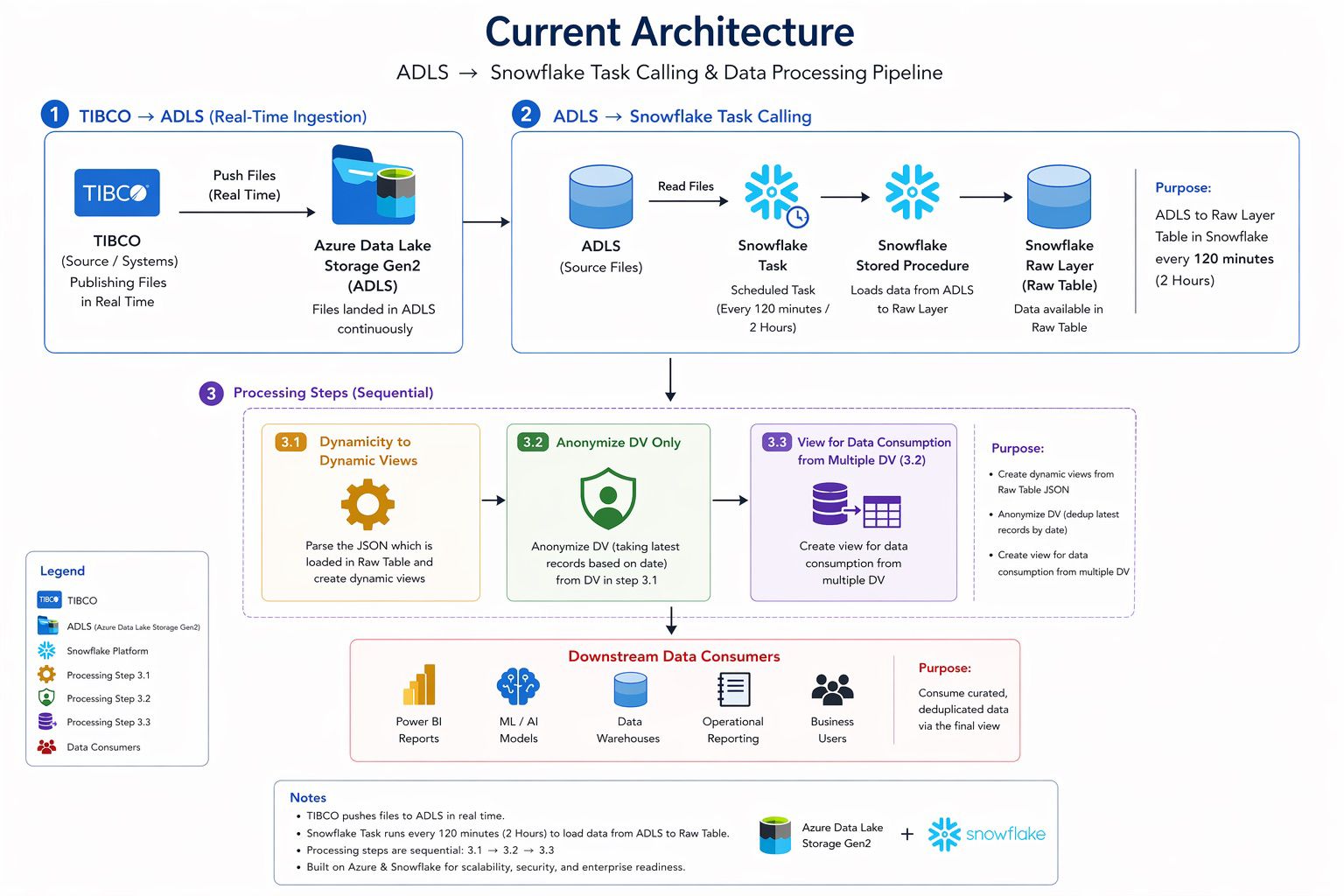
- Disconnected systems. Each platform owns its own slice of the customer.
- Fragmented data. The same customer looks like five different people across systems.
- No real-time backbone. Insight is batched, by the time it's useful, the customer has moved on.
- Reporting, not action. Data is summarised in dashboards rather than fed back into the experience.
The four headline gaps
Where the experience breaks down today.
01
Fragmented CX across channels.
The customer experience changes shape depending on whether they're in store, online, or on WhatsApp.
02
Inconsistent communication.
Different fulfillment systems each speak to the customer in their own voice and timing.
03
Manual, repetitive journeys.
Customers redo the same actions every week — replan the same list, retype the same address, restart the same support thread.
04
Data without intelligence.
An enormous behavioural footprint — but very little of it loops back into action.
Where it hurts
Fragmented order & communication experience.
One order arrives as five conversations — each from a different system, on its own clock.
- Orders split across multiple fulfillment centres — grocery, electronics, home goods.
- Each department communicates independently, sometimes contradictorily.
- The customer pieces it together — and calls support to make sense of it.
One order. Three fulfillment units. Three separate threads.
Omnichannel Relay · Revenue & retention
Every fragmented order experience is a retention opportunity lost.
Without Relay
3 bots, 3 threads, 3 voices.
38% of these customers never come back.
"You spend to acquire — then lose them on delivery."
With Relay agent
Omnichannel Relay · Operational cost
Your support team is paying for a communication failure.
Without Relay
3 bots generate confusion. Customers call support. Agents open 3 systems.
"Support is solving a communication problem, not a real customer problem."
With Relay agent
Omnichannel Relay · Brand & loyalty
You're spending on loyalty — then eroding it in the delivery thread.
Without Relay
3 bot identities speak for one brand. A promo fires during a delay. NPS drops.
"Brand guidelines can't be enforced across 3 independent systems."
With Relay agent
How it works
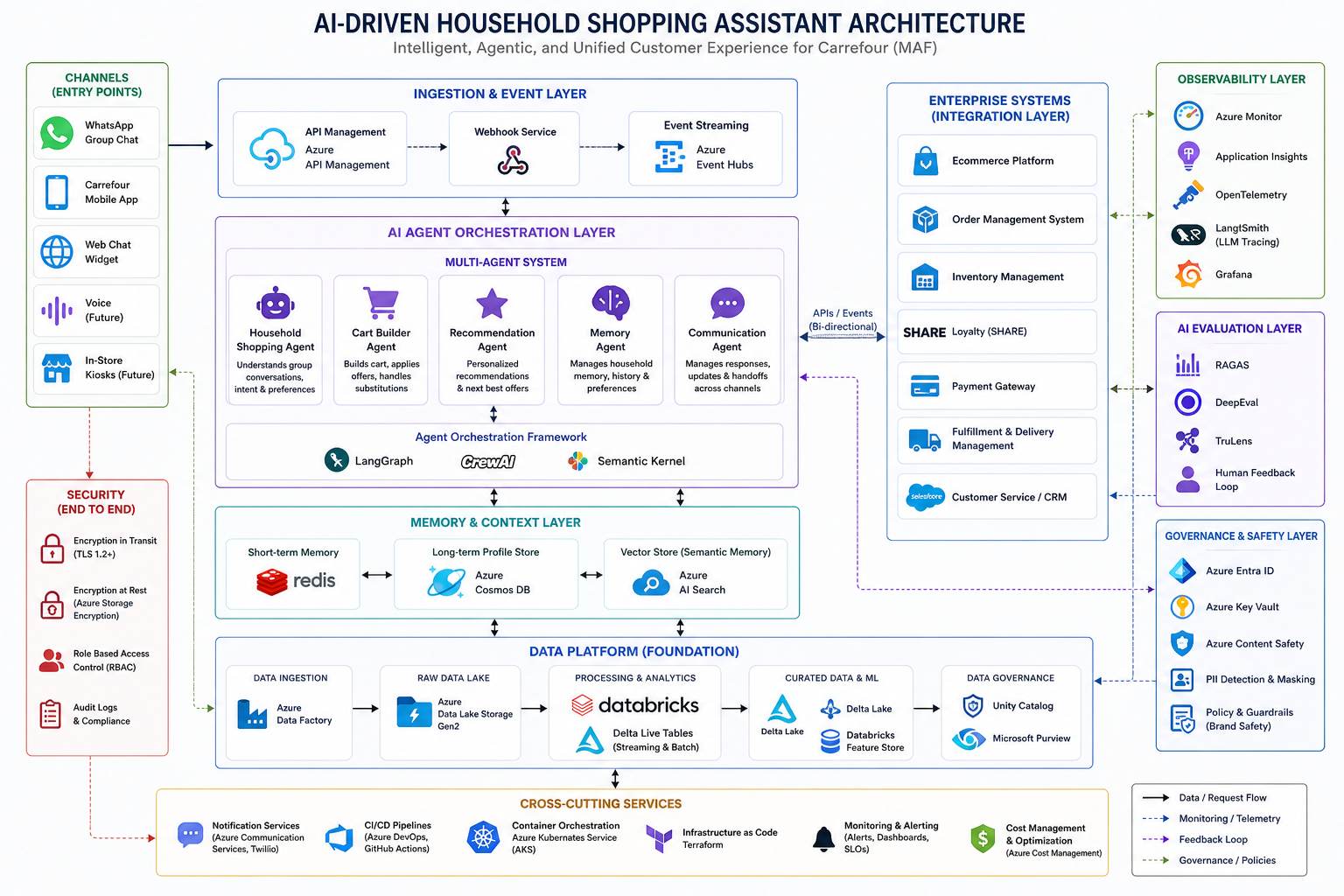
A unified communication orchestration agent.
One brand voice, one channel — coordinated by an AI that owns the customer conversation end-to-end.
- Aggregates updates from multiple fulfillment systems into a single timeline.
- One consistent channel — whichever the customer chose. Brand voice enforced.
- Coordinates internally with delivery teams and 3PL partners — invisibly.

Electronics · tomorrow 4 PM
Home goods · Wed11:02
Where it hurts
Underutilised data, reactive decisions.
We're producing oceans of behavioural data — and using almost none of it to act.
- High volume of behavioural data daily — every click, scroll, and purchase.
- Mostly used for dashboards and reporting — looked at, not acted on.
- Limited ability to generate actionable insights at the speed the customer moves.
Events pour in from every surface — and just sit in Snowflake.
Event-driven · Campaign intelligence
Last month's data is running today's campaigns.
Without the agent
Budget locked to last quarter.
Campaigns read stale data.
"We see the numbers after the campaign ends — never while it runs."
With AI agent
Event-driven · Inventory intelligence
Stock-outs happen the day before they're discovered.
Without the agent
Stock report runs at 2 AM.
Shelves empty before action is taken.
"We find out about stock-outs when customers can't check out."
With AI agent
Event-driven · Margin intelligence
Pricing decisions wait for a meeting that meets quarterly.
Without the agent
Competitor price drops sit unmatched
for days while margin quietly bleeds.
"The approval chain takes longer than the window to act."
With AI agent
How it works
An AI marketing intelligence agent.
Turn the event stream into a continuous source of marketing decisions — minute by minute, not quarter by quarter.
- Continuously processes event streams — analytics, Kafka, transactional logs.
- Detects patterns & cart-abandonment trends in real time.
- Generates insights and personalised offers at the moment of intent.
engine
Forgot something?
Sony WH-1000XM5 — back in stock at 10% off. Free same-day delivery if you check out in the next hour.
View cart
Business impact
Three pillars where this pays back.
Customer experience
Seamless, lower-effort interactions.
- Seamless omnichannel interactions across every touchpoint.
- Reduced effort for customers — they don't repeat themselves.
- Brand consistency at every point of contact.
Operational efficiency
Less manual work, more automated flow.
- Reduced support volume — fewer repetitive cases.
- Automated workflows across fulfillment and care.
- Faster resolution times where humans still need to step in.
Revenue growth
Higher conversion, larger baskets, better retention.
- Higher conversion rates from in-the-moment offers.
- Increased basket size at the household level.
- Improved retention through routine engagement.
The cost of standing still
With vs. without an AI agent strategy.
Without transformation
The gap quietly widens, every quarter.
- Increasing operational costs as point fixes pile up.
- Fragmented customer experience across every channel.
- Missed revenue opportunities — captured by faster competitors.
- Talent drain — best operators tire of working around broken systems.
With AI agent strategy
A compounding advantage, not a one-off win.
- Unified, intelligent CX — one brand, one experience.
- Scalable operations — agents absorb the spikes.
- Sustainable competitive advantage — each cycle teaches the system.
- An AI-ready data foundation that pays back in every future initiative.
Implementation roadmap
Three phases — each one shippable on its own.
Knowledge & first agent.
- Knowledge consolidation across systems.
- Initial AI agent deployment — narrow scope, real users.
- Baseline telemetry and feedback loops.
Omnichannel orchestration.
- Omnichannel integration across web, app, WhatsApp.
- Communication orchestration agent goes live.
- Unified customer profile in production.
Advanced agents & optimisation.
- Advanced AI agents — voice, deep personalisation.
- Continuous optimisation through feedback loops.
- New agent templates, ready for the next vertical.
From transactions to intelligent experiences
Retail is moving from transactional systems to intelligent, agent-driven experiences.
The opportunity is to unify data, systems, and interactions into a single, AI-powered engagement layer — one that drives both customer experience and business value.